

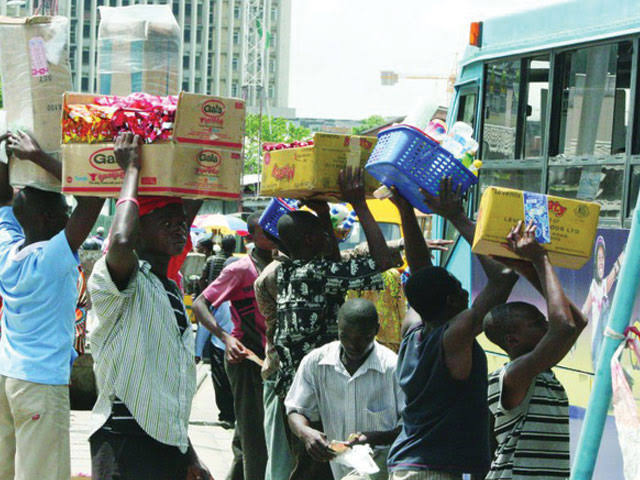


On September 30th, 2023, the Lagos State government, through the Commissioner for Environment, Mr. Tokunbo Wahab, announced a ban on street trading and hawking. The government’s rationale behind this decision was the perceived contribution of street hawking to waste improper disposal and the potential risks it posed to public safety. While these concerns are valid to some extent, it is crucial to examine the deeper issues at play and consider alternative solutions that address the root causes of these problems.
Street hawking has long been a part of Lagos’ economic landscape, serving as a means of livelihood for a significant portion of the population. For many residents who lack access to alternative employment opportunities or the financial resources to secure expensive shop spaces in markets like Tejuosho, Ladipo, and Oshodi, hawking provides a lifeline. With capital requirements as low as half a dollar, it offers an accessible entry point into the informal economy.

The resilience of street hawking, despite government crackdowns, attests to its importance as an economic activity. Even in the face of various restrictions, hawkers in areas like Mainland LGA, Ajeromi-Ifelodun LGA, Oshodi LGA, and Apapa LGA continue to thrive, contributing to local and state resources. It is worth noting that many of these individuals pay daily fees ranging from N560 to N1,850, even when the total value of their goods or services is less than N3,500 (less than $5).
One of the government’s primary concerns is the waste generated by street hawkers. However, it is essential to acknowledge that the waste generated by these individuals pales in comparison to the waste produced by some of the multinational corporations that the government collaborates with in Lagos State. Research conducted by Oresanya and Olukami suggests that waste generation has increased due to the privatization of waste processes, and the effectiveness of waste collection under the Private Sector Participation (PSP) partnership has been called into question.
Lagos, with its estimated population of 24 million, generates over 13,000 metric tonnes of waste daily, according to the Lagos State Waste Management Agency (LAWMA). While the government deserves credit for investing in recycling and waste management initiatives, banning street hawking is not the solution to the waste management challenge. Instead, it is essential to rethink and redirect these efforts to create a more sustainable and inclusive approach.
Many success stories among street hawkers have been widely publicized, revealing stories of individuals who have paid for their education, rent, and started new lives through this form of economic activity. These stories underscore the importance of street hawking as a vital source of income for marginalized communities.
The root causes of waste littering in Lagos are multifaceted. They include inadequate sanitation infrastructure, inefficient privatization efforts, a lack of recycling culture, and improper waste disposal practices. Rather than banning street hawking, the government should focus on addressing these fundamental issues.
The ban on street hawking in Lagos State, while well-intentioned, does not address the root causes of waste mismanagement. Instead of repressing the livelihoods of Lagosians who rely on hawking, the government should focus on comprehensive and sustainable solutions that improve waste management, promote recycling, and support the informal economy. Only through these measures can Lagos truly achieve its goal of a cleaner, more efficient, and economically inclusive city.